Senegal’s economy will grow about 3.1 percent this year, up from 2.5 percent in 2008, as government management of the economy improves, the International Monetary Fund said.
“Budgetary slippages, which had seriously affected the economy” and put IMF support for Senegal at risk, have been successfully addressed, the Washington-based lender said in an e-mailed statement today. “The government’s unpaid bills have been substantially reduced and far-reaching public financial management reforms launched.”
The IMF expects growth in the west African nation to accelerate to 3.4 percent next year and 4.3 percent in 2011.
Consumer inflation was projected to slow to 3.3 percent this year from 5.8 percent last year, and to 0.8 percent in 2010, as food and fuel price increases slow, the IMF said.
The Wade administration should be credited with helping to effect the fiscal discipline that has got the country straightened out.
Showing posts with label food. Show all posts
Showing posts with label food. Show all posts
Monday, July 13, 2009

Friday, March 27, 2009
U.S. provides Senegal food assistance
The U.S. Agency for International Development's (USAID) Office of U.S. Foreign Disaster Assistance (OFDA) is providing more than $3.7 million in assistance to lower rates of malnutrition and increase food security of families in Senegal.
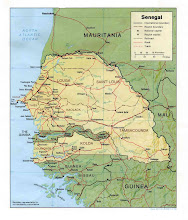
Of this $3.7 million, USAID is providing $2.7 million to improve community-based nutrition efforts and agriculture production in the regions of Ziguinchor, Sedhiou and Kolda in Senegal. The program, implemented by USAID partners Catholic Relief Services and Christian Children's Fund, will provide community-based nutrition programs for malnourished children; build community awareness for the importance of good nutrition and how to prevent malnutrition; educate farmers on the benefits of improved seed varieties; organize seed fairs that will make improved seed varieties available; and provide microloans to community-based groups.
Of this $3.7 million, USAID is providing $2.7 million to improve community-based nutrition efforts and agriculture production in the regions of Ziguinchor, Sedhiou and Kolda in Senegal. The program, implemented by USAID partners Catholic Relief Services and Christian Children's Fund, will provide community-based nutrition programs for malnourished children; build community awareness for the importance of good nutrition and how to prevent malnutrition; educate farmers on the benefits of improved seed varieties; organize seed fairs that will make improved seed varieties available; and provide microloans to community-based groups.
Sunday, March 8, 2009
The Economist's mixed view of today's Senegal
A recent Economist article gives a snapshot of Senegal's political scene with a focus on President Wade... Objectively Senegal is doing pretty good, with credit going to President Wade for positive economic signs such as the Corniche expressway from the airport to downtown and decent communications infrastructure, according to the February 26 article, datelined Dakar without byline.
But the article points to troubling signs from Senegal's political society, much of which it also attributes to the President. Last year's food riots (see our previous posts), and allegations of corruption have generated "rage and frustration" among many Senegalese, according to the article.
The Economist's short article injects some heavy hyperbole: the teaser cites "authoritarian" President Wade and the article's subhead states ominously that: "President Wade will ignore domestic discontent at his peril." This should hardly be news to any politician.
And the article's "taxi-driver" level of analysis misses relevant developments: fortuitous rains and consequent good harvests combined with easing import costs (lower fuel costs) and pending IMF aid will help the country's economic discontent.
Better to sort out the political grumbling after the local elections on March 22. Institutional politics take a backseat in Senegal where personal political ties are more pronounced. That level of political dynamic is beyond the grasp of most observers (including us). And local political elections, as these upcoming, are even more parochial. The losers and disaffected factions from the local elections will make their views known sooner or later. It will take a while to sort out. We intend to be there to get a first hand sense...
But the article points to troubling signs from Senegal's political society, much of which it also attributes to the President. Last year's food riots (see our previous posts), and allegations of corruption have generated "rage and frustration" among many Senegalese, according to the article.
The Economist's short article injects some heavy hyperbole: the teaser cites "authoritarian" President Wade and the article's subhead states ominously that: "President Wade will ignore domestic discontent at his peril." This should hardly be news to any politician.
And the article's "taxi-driver" level of analysis misses relevant developments: fortuitous rains and consequent good harvests combined with easing import costs (lower fuel costs) and pending IMF aid will help the country's economic discontent.
Better to sort out the political grumbling after the local elections on March 22. Institutional politics take a backseat in Senegal where personal political ties are more pronounced. That level of political dynamic is beyond the grasp of most observers (including us). And local political elections, as these upcoming, are even more parochial. The losers and disaffected factions from the local elections will make their views known sooner or later. It will take a while to sort out. We intend to be there to get a first hand sense...
Thursday, January 1, 2009
President Wade: "Happy economic new year!!"
Senegal's President Abdoulaye Wade used his New Year's Eve message to the county to highlight bold economic initiatives out of the daunting climate of the last year. Noting the "off budget" expenditures that the World Bank found fault with, President Wade still claimed that Senegal was the World Bank's highest rated economy.
The president pointed to the launching of Air Teranga, a Senegalese airline, new universities at St. Louis and Kedougou, and the regional port facilities with free market zones and surface connections to Mali and elsewhere in the region. Other infrastructure lurches fitfully ahead at the turn of the year. "If I were to list these projects, it would take much time, I gave instructions to ministers to publish a table with a list of infrastructure to be carried out in 2009" he said. Of course, the World Bank in its requirements to put Senegal back on its approved list required that the country list all such major projects--necessary to get a grip on the off-budget spending and commitments...
It was a detailed speech with a certain Senegalese optimism throughout. The president didn't shy from most of the nation's problems: high gas prices, energy outages, food insecurity. But he was able to point to activities to deal with the problems, especially in the area of agriculture. Fortuitous good harvests help, too. But so do tractors from India and increasing sophistication in the country's animal husbandry... Recent riots in the hinterlands were largely ignored however...
The president pointed to the launching of Air Teranga, a Senegalese airline, new universities at St. Louis and Kedougou, and the regional port facilities with free market zones and surface connections to Mali and elsewhere in the region. Other infrastructure lurches fitfully ahead at the turn of the year. "If I were to list these projects, it would take much time, I gave instructions to ministers to publish a table with a list of infrastructure to be carried out in 2009" he said. Of course, the World Bank in its requirements to put Senegal back on its approved list required that the country list all such major projects--necessary to get a grip on the off-budget spending and commitments...
It was a detailed speech with a certain Senegalese optimism throughout. The president didn't shy from most of the nation's problems: high gas prices, energy outages, food insecurity. But he was able to point to activities to deal with the problems, especially in the area of agriculture. Fortuitous good harvests help, too. But so do tractors from India and increasing sophistication in the country's animal husbandry... Recent riots in the hinterlands were largely ignored however...
Saturday, November 1, 2008
President Wade looks for better GOANA harvest
Six months after President Abdoulaye Wade launched his agricultural growth initiative, Senegal is predicting record harvests for 2008. Good news for Senegal and its president, both of which were battered by food shortages over the last year.
“The Grand Agricultural Offensive for Food Security” or GOANA, was launched by President Wade in May 2008. It aims for Senegal’s self-sufficiency in food production by 2015. Goals include doubling rice production, and increasing maize and manioc yields.
According to IRIN, Senegal imports 600,000 tons of rice a year, or three-quarters of the country’s food consumption, making its people vulnerable to high global rice prices, especially when energy costs boost transportation costs.
Six months into GOANA, the Ministry of Agriculture predicts a harvest of 1.8 million tons of cereal—a 136 percent increase over last year’s yields—700,000 tons of millet, 500,000 tons of maize and 380,000 tons of non-irrigated rice in 2008.
Thousands of supporters, farmers and members of agricultural organizations gathered opposite the presidential palace in Dakar October 27 to showcase harvests of peanuts, fonio, rice, millet, bananas and vegetables.
But according to the IRIN report, good rains may have had more to do with the higher yields than the government subsidized seeds or farm equipment that some farmers say didn’t reach them until past the planting season.
Still, it is a good start to the President’s worthy effort.
“The Grand Agricultural Offensive for Food Security” or GOANA, was launched by President Wade in May 2008. It aims for Senegal’s self-sufficiency in food production by 2015. Goals include doubling rice production, and increasing maize and manioc yields.
According to IRIN, Senegal imports 600,000 tons of rice a year, or three-quarters of the country’s food consumption, making its people vulnerable to high global rice prices, especially when energy costs boost transportation costs.
Six months into GOANA, the Ministry of Agriculture predicts a harvest of 1.8 million tons of cereal—a 136 percent increase over last year’s yields—700,000 tons of millet, 500,000 tons of maize and 380,000 tons of non-irrigated rice in 2008.
Thousands of supporters, farmers and members of agricultural organizations gathered opposite the presidential palace in Dakar October 27 to showcase harvests of peanuts, fonio, rice, millet, bananas and vegetables.
But according to the IRIN report, good rains may have had more to do with the higher yields than the government subsidized seeds or farm equipment that some farmers say didn’t reach them until past the planting season.
Still, it is a good start to the President’s worthy effort.
Subscribe to:
Posts (Atom)