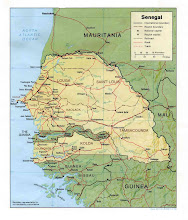
An International Monetary Fund (IMF) mission, led by Mr. Hervé Joly, visited Senegal from October 5-19, 2011 to conduct the second review under the three-year Policy Support Instrument (PSI) arrangement approved in December 2010. The members of the mission met with the ministers of economy and finance, budget, international cooperation, infrastructure, and energy; representatives of the BCEAO; other senior government officials; and representatives of the private sector, civil society and development partners.
At the conclusion of the visit, the mission issued the following statement:
“After recovering in 2010, the Senegalese economy experienced a modest slowdown in early 2011 due to persistent power cuts. Assuming that recent improvements in the electricity sector continue, however, Senegal should post GDP growth of 4 percent in 2011. Inflation rose in early 2011, reflecting increasing international food and petroleum prices, but this trend reversed in the second half of the year and inflation is now expected to average 3.6 percent in 2011.
“Growth in 2012 is expected to be sustained by the significant increase in public investment in 2012, in particular with continued construction work on the toll road and implementation of the Plan Takkal. The restoration of a more reliable supply of electricity should also have a positive impact on other sectors of the economy. These domestic drivers of growth are expected to largely offset the anticipated weakening of external demand and a generally less promising external environment than expected. Overall GDP growth is expected to reach 4.4 percent in 2012 compared to 4 percent in 2011. Inflation should continue to decline, and remain well below 3 percent.
Showing posts with label IMF. Show all posts
Showing posts with label IMF. Show all posts
Friday, October 21, 2011

Wednesday, November 18, 2009
IMF praises governance, bemoans economy
The International Monetary Fund just released its most recent (November 4-18) report on Senegal. Its assessment of the overall economy is gloomy, reflecting the world's economic doldrums. According to the IMF news release on the assessment:
“The global financial crisis and domestic shocks are affecting Senegal’s economy. Growth is expected to slow to 1¼ percent in 2009 from an already depressed 2½ percent in 2008. Business activity has been weak, remittances have been under pressure, and tax revenues are lower than expected. In the second half of this year the economy has also been undercut by electricity shortages and urban flooding."
The report has hopes for a turnaround in 2010, with growth of 3.5 percent. But its most positive comments were reserved for the Senegal government's fiscal discipline of late:
"All quantitative assessment criteria were met and key structural benchmarks have been completed. The stock of the government’s unpaid bills within the regular expenditure chain has been normalized. The mission welcomed progress with reforms to improve public financial management."
In other words, the public sector is continuing to pay its bills despite tough times. Real improvements will await economic recovery. Preparing fertile ground now would help.
"Measures to improve the business climate could include reducing delays in transferring property rights, better contract enforcement, and the simplification of customs procedures."
“The global financial crisis and domestic shocks are affecting Senegal’s economy. Growth is expected to slow to 1¼ percent in 2009 from an already depressed 2½ percent in 2008. Business activity has been weak, remittances have been under pressure, and tax revenues are lower than expected. In the second half of this year the economy has also been undercut by electricity shortages and urban flooding."
The report has hopes for a turnaround in 2010, with growth of 3.5 percent. But its most positive comments were reserved for the Senegal government's fiscal discipline of late:
"All quantitative assessment criteria were met and key structural benchmarks have been completed. The stock of the government’s unpaid bills within the regular expenditure chain has been normalized. The mission welcomed progress with reforms to improve public financial management."
In other words, the public sector is continuing to pay its bills despite tough times. Real improvements will await economic recovery. Preparing fertile ground now would help.
"Measures to improve the business climate could include reducing delays in transferring property rights, better contract enforcement, and the simplification of customs procedures."
Wednesday, October 28, 2009
Wall Street Journal on the "Segura Affair"
The most widely read newspaper in the United State, The Wall Street Journal, has an article today on the highly controversial "going away present" to departing IMF country representative Alex Segura... The top-of-the-fold article in the Journal's "World News"section is titled "Gift from Senegal President Spurs IMF Inquiry," and features a picture of President Abdoulaye Wade. The Wade government is sticking to its characterization of the $200,000 cash given Sequra at his going away party as just an example of traditional Senegalese "terranga." An anti-corruption source in the article calls it "outright bribery." Still, we wonder, what is the quid pro quo? Without expecting something in return, it's simply a gift. Presumably that's one of the questions that the investigation by the International Monetary Fund will seek to answer.
Saturday, October 24, 2009
L'affaire Segura: it's classic Senegal
It has been called bribery, but the real story behind "the Segura Affair" may be more interesting than that. Wittingly or not, the Senegal representative for the International Monetary Fund (IMF) seems to have been what we call in California politics a "bag man," carrying 65 million CFA (about $150,000).
The hapless bagman, Alex Segura, was ending his third tour in Senegal for the IMF. I had spoken to him a couple times by phone (or was it email) in Spring 2008, but was unable to meet him personally because of his travels. It can safely be said that no other foreigner in Senegal was better known--or at least in the media--than Segura (yes, even more than Obama). He was the point man steering the Senegalese economy for the international community.
Segura's role/complicity/whatever is pretty vague. At least that seems to be the picture in the Senegalese press. Some of those reports are supposedly based upon statements from the IMF. But I can't find anything about it on the IMF website and there is virtually no media reports on the "Segura Affair" outside Senegal.
The "real" story, augmented by my informal sources, is that Segura was delivering the money to the Senegalese embassy in Barcelona. He found that he had the money (delivered to him by means uncertain) and let his superiors know. My Senegalese contacts are convinced that he was being used--again wittingly or not--to deliver the money for Senegalese government higher ups. Since the Wade administration does a lot of "cash transactions" their conclusion is that hanky-panky was involved. Maybe it was a bribe. But to who? Segura was exiting his post in Dakar. It doesn't seem to make sense that he was being paid off retrospectively or prospectively.
The IMF is reportedly (by Dakar press) investigating the "Segura Affair." Meanwhile, Senegalese in the U.S. have announced a protest gathering at the IMF headquarters in Washington D.C. to voice their indignation with the Senegalese government and the perception of its corruption galvanized by the "Segura Affair," set for October 31.
The hapless bagman, Alex Segura, was ending his third tour in Senegal for the IMF. I had spoken to him a couple times by phone (or was it email) in Spring 2008, but was unable to meet him personally because of his travels. It can safely be said that no other foreigner in Senegal was better known--or at least in the media--than Segura (yes, even more than Obama). He was the point man steering the Senegalese economy for the international community.
Segura's role/complicity/whatever is pretty vague. At least that seems to be the picture in the Senegalese press. Some of those reports are supposedly based upon statements from the IMF. But I can't find anything about it on the IMF website and there is virtually no media reports on the "Segura Affair" outside Senegal.
The "real" story, augmented by my informal sources, is that Segura was delivering the money to the Senegalese embassy in Barcelona. He found that he had the money (delivered to him by means uncertain) and let his superiors know. My Senegalese contacts are convinced that he was being used--again wittingly or not--to deliver the money for Senegalese government higher ups. Since the Wade administration does a lot of "cash transactions" their conclusion is that hanky-panky was involved. Maybe it was a bribe. But to who? Segura was exiting his post in Dakar. It doesn't seem to make sense that he was being paid off retrospectively or prospectively.
The IMF is reportedly (by Dakar press) investigating the "Segura Affair." Meanwhile, Senegalese in the U.S. have announced a protest gathering at the IMF headquarters in Washington D.C. to voice their indignation with the Senegalese government and the perception of its corruption galvanized by the "Segura Affair," set for October 31.
Monday, July 13, 2009
Positive projections from the IMF
Senegal’s economy will grow about 3.1 percent this year, up from 2.5 percent in 2008, as government management of the economy improves, the International Monetary Fund said.
“Budgetary slippages, which had seriously affected the economy” and put IMF support for Senegal at risk, have been successfully addressed, the Washington-based lender said in an e-mailed statement today. “The government’s unpaid bills have been substantially reduced and far-reaching public financial management reforms launched.”
The IMF expects growth in the west African nation to accelerate to 3.4 percent next year and 4.3 percent in 2011.
Consumer inflation was projected to slow to 3.3 percent this year from 5.8 percent last year, and to 0.8 percent in 2010, as food and fuel price increases slow, the IMF said.
The Wade administration should be credited with helping to effect the fiscal discipline that has got the country straightened out.
“Budgetary slippages, which had seriously affected the economy” and put IMF support for Senegal at risk, have been successfully addressed, the Washington-based lender said in an e-mailed statement today. “The government’s unpaid bills have been substantially reduced and far-reaching public financial management reforms launched.”
The IMF expects growth in the west African nation to accelerate to 3.4 percent next year and 4.3 percent in 2011.
Consumer inflation was projected to slow to 3.3 percent this year from 5.8 percent last year, and to 0.8 percent in 2010, as food and fuel price increases slow, the IMF said.
The Wade administration should be credited with helping to effect the fiscal discipline that has got the country straightened out.
Friday, June 19, 2009
IMF boosts aid by $186 million, longer terms
The International Monetary Fund (IMF) boosted financial support for Senegal under the Exogenous Shocks Facility (ESF) by $186 million today and extended the ESF arrangement by six months, to 18 months to help finance the balance-of-payments impact of the global economic crisis. Senegal can draw $50 million immediately.
"Exogenous shocks" are the food prices and other impacts of the high oil prices that buffetted Senegal in the last year. Some questionable government budgeting resulted including failure to pay private contractors for infrastructure. The IMF says those practices have been reformed, but wants to make sure they stay that way.
The IMF says the financial and budget reforms will help gain investment for Senegal while it weathers the international economic slowdown that has started to hit the country.
"Exogenous shocks" are the food prices and other impacts of the high oil prices that buffetted Senegal in the last year. Some questionable government budgeting resulted including failure to pay private contractors for infrastructure. The IMF says those practices have been reformed, but wants to make sure they stay that way.
The IMF says the financial and budget reforms will help gain investment for Senegal while it weathers the international economic slowdown that has started to hit the country.
Friday, April 17, 2009
A new Senegal energy source: openness
A unique solution to Senegal's energy dilemma was recommended recently by Alex Segura, the IMF's resident representative. The solution is two part: cash and transparency. And the two go together. Senegal's utilities are stuck in a spot market rut: they buy fuel oil one tanker at a time, in cash, frequently borrowed cash, from who-knows-where... Instead Segura urges transparent bidding. International finance experts have always pushed open bidding in African economies, with little progress. In the energy sector it makes sense, but is no easier than other sectors such as infrastructure. Oil powers Senegal's feeble generation capacity. That's imported, refined oil--especially subject to the world extaction, refining and transportation market, and its very evident vagaries, especially recently... It will take some real arm twisting for Senegal's utility sector (hardly deserving the name) to institute the discipline, and smarts, necessary for a successful open bidding program. But the payoffs would seem great: the consequent tools of hedge and option trading of supplies could create a buffer in hard economic times as these... Segura's recent comments were larded with praise for the progress being made by Senegal's establishment in the area of budget reform and accountability, setting the foundation for sophistication in its energy policies and practices...
Friday, April 10, 2009
IMF: backpayments being squared, but tough times ahead
The International Monetary Fund (IMF) concluded recent reviews of Senegal's finances with (for Senegal) high marks for catching up with payments to private contractors. But the April 2 report stressed tough times ahead as the world economy comes to bear.
“Senegal is beginning to experience the effects of the global economic crisis. Main channels of transmission are declining remittances, commodity prices, external demand, and foreign direct investment," according to a statement by Johannes Mueller, IMF Mission Chief for Senegal. He notes positive signs on the horizon: "Declining fuel and food prices are projected to lower inflation to about 1 percent in 2009 and limit Senegal’s import bill, thereby helping contain the external current account deficit."
Despite budget and accounting reforms, falling tax revenues will require deficit spending to continue infrastructure improvments and private contracting, according to the IMF report.
No mention is made of the recent local elections and whether they would chill President Abdoulaye Wade's promotion of intrastructure and private projects. Recently the president reportedly stated his pleas to God that he be allowed to complete infrastucture such as the coastal highway...
“Senegal is beginning to experience the effects of the global economic crisis. Main channels of transmission are declining remittances, commodity prices, external demand, and foreign direct investment," according to a statement by Johannes Mueller, IMF Mission Chief for Senegal. He notes positive signs on the horizon: "Declining fuel and food prices are projected to lower inflation to about 1 percent in 2009 and limit Senegal’s import bill, thereby helping contain the external current account deficit."
Despite budget and accounting reforms, falling tax revenues will require deficit spending to continue infrastructure improvments and private contracting, according to the IMF report.
No mention is made of the recent local elections and whether they would chill President Abdoulaye Wade's promotion of intrastructure and private projects. Recently the president reportedly stated his pleas to God that he be allowed to complete infrastucture such as the coastal highway...
Sunday, March 8, 2009
The Economist's mixed view of today's Senegal
A recent Economist article gives a snapshot of Senegal's political scene with a focus on President Wade... Objectively Senegal is doing pretty good, with credit going to President Wade for positive economic signs such as the Corniche expressway from the airport to downtown and decent communications infrastructure, according to the February 26 article, datelined Dakar without byline.
But the article points to troubling signs from Senegal's political society, much of which it also attributes to the President. Last year's food riots (see our previous posts), and allegations of corruption have generated "rage and frustration" among many Senegalese, according to the article.
The Economist's short article injects some heavy hyperbole: the teaser cites "authoritarian" President Wade and the article's subhead states ominously that: "President Wade will ignore domestic discontent at his peril." This should hardly be news to any politician.
And the article's "taxi-driver" level of analysis misses relevant developments: fortuitous rains and consequent good harvests combined with easing import costs (lower fuel costs) and pending IMF aid will help the country's economic discontent.
Better to sort out the political grumbling after the local elections on March 22. Institutional politics take a backseat in Senegal where personal political ties are more pronounced. That level of political dynamic is beyond the grasp of most observers (including us). And local political elections, as these upcoming, are even more parochial. The losers and disaffected factions from the local elections will make their views known sooner or later. It will take a while to sort out. We intend to be there to get a first hand sense...
But the article points to troubling signs from Senegal's political society, much of which it also attributes to the President. Last year's food riots (see our previous posts), and allegations of corruption have generated "rage and frustration" among many Senegalese, according to the article.
The Economist's short article injects some heavy hyperbole: the teaser cites "authoritarian" President Wade and the article's subhead states ominously that: "President Wade will ignore domestic discontent at his peril." This should hardly be news to any politician.
And the article's "taxi-driver" level of analysis misses relevant developments: fortuitous rains and consequent good harvests combined with easing import costs (lower fuel costs) and pending IMF aid will help the country's economic discontent.
Better to sort out the political grumbling after the local elections on March 22. Institutional politics take a backseat in Senegal where personal political ties are more pronounced. That level of political dynamic is beyond the grasp of most observers (including us). And local political elections, as these upcoming, are even more parochial. The losers and disaffected factions from the local elections will make their views known sooner or later. It will take a while to sort out. We intend to be there to get a first hand sense...
Wednesday, January 14, 2009
Tough love: IMF spanks Dakar budgeting but promises "exogenous shocks" relief
In a report issued yesterday, the International Monetary Fund revealed much about Senegal's fiscal problems over the last year. But, after hard work over the last six months or so, the IMF concludes that Senegal has tackled "extrabudgetary expendi-tures" and nonpayment of its bills, so much so that the IMF approved relief from the IMF's "Exogenous Shocks Fund." Indeed "exogenous shocks"-- the high oil prices and food shortages-- were evidently a big reason for the government's "off-budget" spending, to the detriment of contractors, such as those in Touba that we have posted about before.
The actual report is titled:
"Senegal: Second Review Under the Policy Support Instrument, Request for a Twelve-Month Arrangement Under the Exogenous Shocks Facility, and Request for Waivers and Modification of Assessment Criteria—Staff Report; Staff Statement; Press Release on the Executive Board Discussion; and Statement by the Executive Director for Senegal" and dated January 2009.
Nestled in the economists' jargon are many revelations of what has been happening with Senegal's budget. We'll try to post further, but meanwhile here is one of the conditions the IMF is putting on "exogenous shock" relief, pertaining to an audit of the government's actual indebtedness to its private contractors:
“No payments will be made to the private sector for any extrabudgetary expenditure before the audit has established the nature of claims and specified the goods and services that were provided and their unit cost. To prevent a recurrence of such spending, the government will impose sanctions on employees found to be at fault and apply a discount factor to the claims of private firms that agreed to provide goods or services on unlawful terms. The government will pay claims recognized on the basis of the audit only after authorization by a budget law providing for simultaneous reductions of appropriations for other expenditure items.” (IMF report, page 46, item 26.)
In other words: contractors who do work on the promise of money that hasn't been legally authorized will take their chances.
The actual report is titled:
"Senegal: Second Review Under the Policy Support Instrument, Request for a Twelve-Month Arrangement Under the Exogenous Shocks Facility, and Request for Waivers and Modification of Assessment Criteria—Staff Report; Staff Statement; Press Release on the Executive Board Discussion; and Statement by the Executive Director for Senegal" and dated January 2009.
Nestled in the economists' jargon are many revelations of what has been happening with Senegal's budget. We'll try to post further, but meanwhile here is one of the conditions the IMF is putting on "exogenous shock" relief, pertaining to an audit of the government's actual indebtedness to its private contractors:
“No payments will be made to the private sector for any extrabudgetary expenditure before the audit has established the nature of claims and specified the goods and services that were provided and their unit cost. To prevent a recurrence of such spending, the government will impose sanctions on employees found to be at fault and apply a discount factor to the claims of private firms that agreed to provide goods or services on unlawful terms. The government will pay claims recognized on the basis of the audit only after authorization by a budget law providing for simultaneous reductions of appropriations for other expenditure items.” (IMF report, page 46, item 26.)
In other words: contractors who do work on the promise of money that hasn't been legally authorized will take their chances.
Saturday, November 15, 2008
IMF criticises Dakar for its "slow pay" history on infrastructure work
Previous posts have highlighted the Dakar central govern-ment's "slow pay" history on the Touba infrastructure projects. In the euphemistic terminology of the IMF, a statement following last September's report indicates it is aware of the problem:
"The mission evaluated the serious budgetary slippages that were uncovered in early August 2008. They comprise a large stock of unpaid bills to the private sector within the normal budgetary framework that have accumulated over the last few years, as well as past extrabudgetary spending, which, taken together, were inconsistent with the availability of financing and Senegal's macroeconomic circumstances. While a full assessment of the stock of unpaid bills is ongoing, their extent and lack of consis-tency with the budgetary framework warrant strong actions."
More recent posts here note that President Wade's visit to Touba this week was accompanied by some major payment installments on the Chinese infrastructure work there. One wonders however what result will come of the IMF's "full assessment" of the unpaid bills.
"The mission evaluated the serious budgetary slippages that were uncovered in early August 2008. They comprise a large stock of unpaid bills to the private sector within the normal budgetary framework that have accumulated over the last few years, as well as past extrabudgetary spending, which, taken together, were inconsistent with the availability of financing and Senegal's macroeconomic circumstances. While a full assessment of the stock of unpaid bills is ongoing, their extent and lack of consis-tency with the budgetary framework warrant strong actions."
More recent posts here note that President Wade's visit to Touba this week was accompanied by some major payment installments on the Chinese infrastructure work there. One wonders however what result will come of the IMF's "full assessment" of the unpaid bills.
Subscribe to:
Posts (Atom)