Showing posts with label environmental. Show all posts
Showing posts with label environmental. Show all posts
Saturday, November 22, 2008
Senegal congress environmental department budget misses chance to pick up the garbage
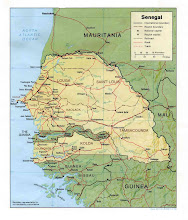
Senegal's government cut the budget slightly this year to the Environment Ministry, but not before representatives deplored the state of garbage in the country. The $67.7 million (U.S.) environmental budget approved is down several million from the last adopted budget. Deputies in the National Assembly voiced their concerns that the garbage ringing Senegal's cities is creating a health hazard. The town of Kaolack, in the heart of the country's groundnut crop region voiced special concerns. The government responded that APIX, the foreign investment agency, and the city of Dakar are working on addressing the growing garbage problem as well as the closure of Mbeubeubus, the nation's sole actual landfill... Other environmental concerns such as fisheries and wildfires were noted as affected by the lowered environmental budget. But it is the garbage problem which Senegalese are most concerned about, according to the article Le Quotidien.

Wednesday, April 23, 2008
Dakar's mysterious disappearing waste management
Tuesday, April 22, 2008
I came here interested in ventures/collaborations/projects involving solid waste management in Senegal. From my advance research on the subject, a mystery remained about the fate of the AMA project here. The multi-million dollar, 25-year AMA project, the World Bank’s most significant waste management project in Africa, started with competitive bidding four or five years ago. The Italian company AMA won the contract to collect the entire Dakar region, build a transfer station and develop a landfill to replace the out-of-control, polluting Mbeubeus dump. But suddenly after the contract had been implemented for a couple year, the project simply ended. The government stopped payments on its contract, and presumably the bank loan. It was never clear why. Today I spoke with Christian Diou, the World Bank’s infrastructure manager for Dakar. He gave the bank’s understanding of the project breakdown—they don’t know either. Not much more than a year ago, he says, the government simply pulled its payments and terminated the contract. The garbage trucks and facility plans were stopped in their tracks. There was no explanation given by the Ministry of Environment which handled the contract. However, my Senegalese sources, and hints from the internet, indicate that the problem had something to do with labor; that unions formed of the waste workers hired by AMA made unmet demands. Nor should it go unnoticed that once the AMA contract was breached, the French firm, Veolia, moved in to manage the easy collection in downtown Dakar… Perhaps here as in California garbage, like politics, is always local. (Or maybe that French sense of the colonial “droit de seigneur” asserting itself under the table.) Since the AMA meltdown, the central government, says Mr. Diou, has enacted the devolution of waste management authority to the local “commune” governments of Dakar and nearby Rufisque. Those two communes are working together loosely to handle or contract waste collection and management. The result is apparently a patchwork of waste management that the central government has left (perhaps consciously) little understood or known…
Earlier in the day we met with the Ministry of Environment. After first greeting the minister himself, he passed us off to his sub-minister with the garbage portfolio. The one clear message I got from the minister himself was that Mbeubeus must close. Later today I learned from Mr. Diou why the government is so decided to get rid of Mbeubeus—the huge dump is smack in the way of the showcase coastal highway that is the Wade administration’s highest priority public project. The Mbeubeus closure is one waste project that the World Bank and the Senegal government can both get behind, says M. Diou, and the bank will help fund those efforts. But I got the strong impression that further World Bank involvement in waste collection and management here is unlikely—once burned as they were.
I came here interested in ventures/collaborations/projects involving solid waste management in Senegal. From my advance research on the subject, a mystery remained about the fate of the AMA project here. The multi-million dollar, 25-year AMA project, the World Bank’s most significant waste management project in Africa, started with competitive bidding four or five years ago. The Italian company AMA won the contract to collect the entire Dakar region, build a transfer station and develop a landfill to replace the out-of-control, polluting Mbeubeus dump. But suddenly after the contract had been implemented for a couple year, the project simply ended. The government stopped payments on its contract, and presumably the bank loan. It was never clear why. Today I spoke with Christian Diou, the World Bank’s infrastructure manager for Dakar. He gave the bank’s understanding of the project breakdown—they don’t know either. Not much more than a year ago, he says, the government simply pulled its payments and terminated the contract. The garbage trucks and facility plans were stopped in their tracks. There was no explanation given by the Ministry of Environment which handled the contract. However, my Senegalese sources, and hints from the internet, indicate that the problem had something to do with labor; that unions formed of the waste workers hired by AMA made unmet demands. Nor should it go unnoticed that once the AMA contract was breached, the French firm, Veolia, moved in to manage the easy collection in downtown Dakar… Perhaps here as in California garbage, like politics, is always local. (Or maybe that French sense of the colonial “droit de seigneur” asserting itself under the table.) Since the AMA meltdown, the central government, says Mr. Diou, has enacted the devolution of waste management authority to the local “commune” governments of Dakar and nearby Rufisque. Those two communes are working together loosely to handle or contract waste collection and management. The result is apparently a patchwork of waste management that the central government has left (perhaps consciously) little understood or known…
Earlier in the day we met with the Ministry of Environment. After first greeting the minister himself, he passed us off to his sub-minister with the garbage portfolio. The one clear message I got from the minister himself was that Mbeubeus must close. Later today I learned from Mr. Diou why the government is so decided to get rid of Mbeubeus—the huge dump is smack in the way of the showcase coastal highway that is the Wade administration’s highest priority public project. The Mbeubeus closure is one waste project that the World Bank and the Senegal government can both get behind, says M. Diou, and the bank will help fund those efforts. But I got the strong impression that further World Bank involvement in waste collection and management here is unlikely—once burned as they were.
Monday, April 14, 2008
A busy day of business
Monday, April 14, 2008
Started with coffee in the shop downstairs at the President. Had the luck to be invited to sit with Heinz Leuenberger, director of the environmental management branch of the United Nations Industrial Development Organization, based now in Vienna. We had, for me, a very fascinating discussion of international developments, from the changes in Vienna since the opening of East Europe (and the amazing speed with which it has reassumed its role as a cultural capital—Hapsburgs redux), to the looming clash between Russia and China over Eastern Russia, where energy resources, space and cultural affinities may be too great for China to resist. Heinz is here for the big renewable energy conference being held at the hotel all this week…
Mustafa, our driver, was there to take me just as I finished coffee. I made the mistake of leaving my jacket which made Mamemor very unhappy with me, because we were going to meet bankers with some other prospective Senegalese associates. Specifically we met with the charming Oumy Bar Diouf, a “chef d’agence” of Ecobank. The bank, active throughout West Africa, is very interested in expanding its portfolio in the works that we are planning. I believe that I effectively conveyed the applicable principles of non-recourse project financing and available American guarantees. I think she was jazzed. We discussed their loan approval process and possible strategic alliance; I promised to get back to speak with her after doing my informal field analysis and before returning home… We then visited the factory of our associate Mr. Ndiaye, near the oil refinery. I was somewhat disturbed by the lack of worker safety assurance. Mamemor and I later talked at length about how to assure improvements in that aspect for our projects…
Afterwards we met with M. Libasse Niang at his bureau to prepare for our meeting with the minister of agricultural development downtown. The government has an aggressive policy to expand agriculture, recognizing the opportunity to relieve urban overcrowding and promote the economy and welfare of the people at the same time. The downtown this afternoon was busy and active, but we had to cool our heels for a good couple hours before the minister and two of his staff could see us. The minister himself had to beg off early for a meeting with an important Saudi… We all agreed that in the end the meeting was productive; the staff people promising full support for the Cap International project. But it took them a while to understand that this was a private project (which they say they never see) which would ultimately get private, albeit guaranteed, financing—not a handout, not a “gift” from the Saudis or any others, rather a plan to put agriculture in place. Fortunately we had the redoubtable M. Libasse to convey our plans. I have seen many a smooth lobbyist in my day—they are born not made: an engineering contractor by training, M. Libasse is a born lobbyist…
After dropping everybody back at M. Libasse’s bureau, Mamemor and I headed back toward the hotel. We stopped on the way to the restaurant we had been to on Saturday for breakfast; they wouldn’t let Mamemor bring in his own bottled water, so he insisting on leaving. On the way out there were soldiers along the road by the car and the road, usually crowded, was suddenly deserted. Mamemor called it: “the President is probably coming.” And indeed he did with motorcycle cops, sirens, SUVs and limos screaming by. Maybe going to the airport I said. Maybe the President was going to the President hotel, said Mamemor and again he called it exactly. By the time we got to the hotel they were all there, with the presidential guard. I got myself in a picture with one of them—very good uniforms. President Wade ducked out very shortly before we could see him, but Mamemor spotted Dr. Cheikh Tidiane Gadio, the minister of foreign affairs (our Secretary of State). He is very important—Mamemor and I had just been speaking on the way to the hotel of the Senegalese government’s growing importance on the world stage, as not just the broker of West African development (witness the assumption of the trial of the ex-Congo president), but even in matters as paramount as Iranian-American relations (vis President Wade’s meeting with Ahmadinejad this weekend. That said, Dr. Gadio was very accessible and friendly; he had studied in America and spoke English fluently, and as clear evidence of his civility—he let me have a picture with him. Afterwards with Mamemor, I found the restaurant down by the waterfront that I didn’t know about—incredible setting, pricey but worth-it buffet. In the elevator up to the room, I saw Heinz again; he says the President and Senegalese top officials will be speaking at the conference this week… All-in-all a fantastic day and productive day…
Started with coffee in the shop downstairs at the President. Had the luck to be invited to sit with Heinz Leuenberger, director of the environmental management branch of the United Nations Industrial Development Organization, based now in Vienna. We had, for me, a very fascinating discussion of international developments, from the changes in Vienna since the opening of East Europe (and the amazing speed with which it has reassumed its role as a cultural capital—Hapsburgs redux), to the looming clash between Russia and China over Eastern Russia, where energy resources, space and cultural affinities may be too great for China to resist. Heinz is here for the big renewable energy conference being held at the hotel all this week…
Mustafa, our driver, was there to take me just as I finished coffee. I made the mistake of leaving my jacket which made Mamemor very unhappy with me, because we were going to meet bankers with some other prospective Senegalese associates. Specifically we met with the charming Oumy Bar Diouf, a “chef d’agence” of Ecobank. The bank, active throughout West Africa, is very interested in expanding its portfolio in the works that we are planning. I believe that I effectively conveyed the applicable principles of non-recourse project financing and available American guarantees. I think she was jazzed. We discussed their loan approval process and possible strategic alliance; I promised to get back to speak with her after doing my informal field analysis and before returning home… We then visited the factory of our associate Mr. Ndiaye, near the oil refinery. I was somewhat disturbed by the lack of worker safety assurance. Mamemor and I later talked at length about how to assure improvements in that aspect for our projects…
Afterwards we met with M. Libasse Niang at his bureau to prepare for our meeting with the minister of agricultural development downtown. The government has an aggressive policy to expand agriculture, recognizing the opportunity to relieve urban overcrowding and promote the economy and welfare of the people at the same time. The downtown this afternoon was busy and active, but we had to cool our heels for a good couple hours before the minister and two of his staff could see us. The minister himself had to beg off early for a meeting with an important Saudi… We all agreed that in the end the meeting was productive; the staff people promising full support for the Cap International project. But it took them a while to understand that this was a private project (which they say they never see) which would ultimately get private, albeit guaranteed, financing—not a handout, not a “gift” from the Saudis or any others, rather a plan to put agriculture in place. Fortunately we had the redoubtable M. Libasse to convey our plans. I have seen many a smooth lobbyist in my day—they are born not made: an engineering contractor by training, M. Libasse is a born lobbyist…
After dropping everybody back at M. Libasse’s bureau, Mamemor and I headed back toward the hotel. We stopped on the way to the restaurant we had been to on Saturday for breakfast; they wouldn’t let Mamemor bring in his own bottled water, so he insisting on leaving. On the way out there were soldiers along the road by the car and the road, usually crowded, was suddenly deserted. Mamemor called it: “the President is probably coming.” And indeed he did with motorcycle cops, sirens, SUVs and limos screaming by. Maybe going to the airport I said. Maybe the President was going to the President hotel, said Mamemor and again he called it exactly. By the time we got to the hotel they were all there, with the presidential guard. I got myself in a picture with one of them—very good uniforms. President Wade ducked out very shortly before we could see him, but Mamemor spotted Dr. Cheikh Tidiane Gadio, the minister of foreign affairs (our Secretary of State). He is very important—Mamemor and I had just been speaking on the way to the hotel of the Senegalese government’s growing importance on the world stage, as not just the broker of West African development (witness the assumption of the trial of the ex-Congo president), but even in matters as paramount as Iranian-American relations (vis President Wade’s meeting with Ahmadinejad this weekend. That said, Dr. Gadio was very accessible and friendly; he had studied in America and spoke English fluently, and as clear evidence of his civility—he let me have a picture with him. Afterwards with Mamemor, I found the restaurant down by the waterfront that I didn’t know about—incredible setting, pricey but worth-it buffet. In the elevator up to the room, I saw Heinz again; he says the President and Senegalese top officials will be speaking at the conference this week… All-in-all a fantastic day and productive day…
Subscribe to:
Posts (Atom)