So which is it? Americafrica? Chinafrica? Francoafrique? France has been the old-school colonial influence over Africa's economy. China has poured billions into its Africa economic stake, with special avarice for its resources. Is America now in the game?
U.S. President Obama's recent visit to Ghana cemented widely held warm feelings toward America held by Africans. Many Africans have long seething resentments toward the French. New found resentments toward the Chinese are growing. Witness recently the backlash of the Mourides to the French television's prejudiced portrayal of Senegalese merchants as akin to black gypsies, worse (to the French), black gypsies with religious faith.
Obama's good will is but a further step in the vigorous march of American presidents to Africa. Clinton's drum performance at the Meridian in Dakar was followed by President Bush's successes against AIDS and malaria, as well as aggressive trade initiatives.
But for all that, America's trade with Africa still pales compared to that of France and China. The United State is making no strong plays for natural resources there. We send some Caterpillar tractors, maybe export a few cars, import some clothes. But that's it.
Nor was Obama's visit a foundation for deeper economic connections. Continued foreign aid perhaps. Continued good will for diplomatic partnership. But why, with all the good will, can't the U.S. turn the Africans into Chevy-driving, Ipod-listening Mac users? Lord knows the Africans would want to. Why can't American oil interests build a refinery in Dakar, or craft mining deals?
Showing posts with label oil. Show all posts
Showing posts with label oil. Show all posts
Monday, July 13, 2009

Sunday, April 19, 2009
Offshore oil exploration not the first time for Senegal
The recent spike in oil prices has revived interest in exploration off the Senegal's coast. Here's a good overview of past exploration activities:
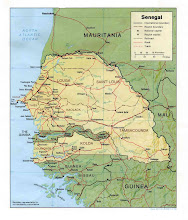
In the last 48 years, more than 144 hydrocarbon exploration wells have been drilled in Senegalese territory. At least 49 of these drilled offshore, with 23 of these being located in the Casamance Offshore. The other area of interest that has been drilled is onshore in the vicinity of the Cape Vert Peninsula. The rest of the Senegal Basin outside these areas remains under-explored.
In addition, modern analysis indicates that many of the boreholes drilled, particularly those based on seismic information acquired before 1962, were poorly located in prospects and many were limited to exploration of the Tertiary to Senonian intervals.
The upstream oil industry is becoming increasingly important to the Senegalese economy. In 1981, PETROSEN, the national oil company, was created by the government of Senegal and is responsible for all hydrocarbon exploration activities.
During the 1950s petroleum prospecting started and in the 1960s and 1970s a number of small fields were discovered, but found uneconomical not exploited. In the late 1970s, offshore exploration started again and a field of heavy crude oil of 1 billion barrels was discovered. So far only one gas field (Diam Niadio 14) has been discovered. The gas is exported by pipeline to the Societe Nationale d'Electricite for its gas power stations. Current gas reserves are estimated to be 3 billion cubic metres. According to the US Department of Energy, Senegal produced and consumed 1.4 billion barrels of dry gas.
The offshore border area containing the Dome Flore and Gea fields became the subject of dispute between Senegal and Guinea-Bissau. In 1993, the Agence de Gestion et de Cooperation entre la Guinea-Bissau et le Senegal (AGC) was established as a joint commission to oversee oil and gas exploration and fishing in the disputed area between the Senegal and Guinea-Bissau.
In July 2004 Hunt Oil Company, through its wholly owned subsidiary Senegal Hunt Oil Company, signed an agreement with Petrosen (Petroleum Company of Senegal), giving Hunt the exclusive right to carry out petroleum exploration and production operations in Sangomar-Rufisque Offshore Area of Senegal (approximately 3,701,805 square acres).
Energy Africa acquired the St. Louis exploration licence with Petrosen in late 2003. Tullow operates the licence with a 60 percent interest. Dana acquired a 30 percent interest from Tullow in the fourth quarter of 2004. Petrosen holds the remaining 10 percent.
In March 2005 Sterling signed a farm-out deal with Markmore Energy (L) Ltd, a private oil and gas company wholly owned by investor Tan Sri Halim Saad for the Dome Flore offshore petroleum license held by Sterling. The Dome Flore block offshore Senegal and Guinea Bissau, contains an estimated 800 million barrels of heavy oil in place. The discoveries lie in 50 metres of water, approximately 70 km offshore.
In the last 48 years, more than 144 hydrocarbon exploration wells have been drilled in Senegalese territory. At least 49 of these drilled offshore, with 23 of these being located in the Casamance Offshore. The other area of interest that has been drilled is onshore in the vicinity of the Cape Vert Peninsula. The rest of the Senegal Basin outside these areas remains under-explored.
In addition, modern analysis indicates that many of the boreholes drilled, particularly those based on seismic information acquired before 1962, were poorly located in prospects and many were limited to exploration of the Tertiary to Senonian intervals.
The upstream oil industry is becoming increasingly important to the Senegalese economy. In 1981, PETROSEN, the national oil company, was created by the government of Senegal and is responsible for all hydrocarbon exploration activities.
During the 1950s petroleum prospecting started and in the 1960s and 1970s a number of small fields were discovered, but found uneconomical not exploited. In the late 1970s, offshore exploration started again and a field of heavy crude oil of 1 billion barrels was discovered. So far only one gas field (Diam Niadio 14) has been discovered. The gas is exported by pipeline to the Societe Nationale d'Electricite for its gas power stations. Current gas reserves are estimated to be 3 billion cubic metres. According to the US Department of Energy, Senegal produced and consumed 1.4 billion barrels of dry gas.
The offshore border area containing the Dome Flore and Gea fields became the subject of dispute between Senegal and Guinea-Bissau. In 1993, the Agence de Gestion et de Cooperation entre la Guinea-Bissau et le Senegal (AGC) was established as a joint commission to oversee oil and gas exploration and fishing in the disputed area between the Senegal and Guinea-Bissau.
In July 2004 Hunt Oil Company, through its wholly owned subsidiary Senegal Hunt Oil Company, signed an agreement with Petrosen (Petroleum Company of Senegal), giving Hunt the exclusive right to carry out petroleum exploration and production operations in Sangomar-Rufisque Offshore Area of Senegal (approximately 3,701,805 square acres).
Energy Africa acquired the St. Louis exploration licence with Petrosen in late 2003. Tullow operates the licence with a 60 percent interest. Dana acquired a 30 percent interest from Tullow in the fourth quarter of 2004. Petrosen holds the remaining 10 percent.
In March 2005 Sterling signed a farm-out deal with Markmore Energy (L) Ltd, a private oil and gas company wholly owned by investor Tan Sri Halim Saad for the Dome Flore offshore petroleum license held by Sterling. The Dome Flore block offshore Senegal and Guinea Bissau, contains an estimated 800 million barrels of heavy oil in place. The discoveries lie in 50 metres of water, approximately 70 km offshore.
Friday, April 17, 2009
A new Senegal energy source: openness
A unique solution to Senegal's energy dilemma was recommended recently by Alex Segura, the IMF's resident representative. The solution is two part: cash and transparency. And the two go together. Senegal's utilities are stuck in a spot market rut: they buy fuel oil one tanker at a time, in cash, frequently borrowed cash, from who-knows-where... Instead Segura urges transparent bidding. International finance experts have always pushed open bidding in African economies, with little progress. In the energy sector it makes sense, but is no easier than other sectors such as infrastructure. Oil powers Senegal's feeble generation capacity. That's imported, refined oil--especially subject to the world extaction, refining and transportation market, and its very evident vagaries, especially recently... It will take some real arm twisting for Senegal's utility sector (hardly deserving the name) to institute the discipline, and smarts, necessary for a successful open bidding program. But the payoffs would seem great: the consequent tools of hedge and option trading of supplies could create a buffer in hard economic times as these... Segura's recent comments were larded with praise for the progress being made by Senegal's establishment in the area of budget reform and accountability, setting the foundation for sophistication in its energy policies and practices...
Wednesday, March 25, 2009
Shell advances Senegal offshore oil exploration
First Australian Resources (FAR) has signed an agreement with Shell Exploration Company to conduct petroleum exploration of Sangomar Offshore, Rufisque Offshore and Sangomar Deep Offshore blocks off the coast of Senegal,where a number of drilling prospects have already been identified by FAR and its Senegalese partner Petrosen.
The objective of the program is designed to enable Shell to determine whether or not to exercise an option to acquire greater interest in the block and enter the second renewal period that includes a well commitment.
Shell will fund a controlled source electro magnetic (CSEM) data acquisition and geophysical evaluation programme over part of the licence area where a number of drilling prospects have already been identified by FAR. The work gets underway soon.
The objective of the program is designed to enable Shell to determine whether or not to exercise an option to acquire greater interest in the block and enter the second renewal period that includes a well commitment.
Shell will fund a controlled source electro magnetic (CSEM) data acquisition and geophysical evaluation programme over part of the licence area where a number of drilling prospects have already been identified by FAR. The work gets underway soon.
Saturday, February 14, 2009
China and Senegal: sweethearts hook up
They've known each other for about three years. "Mais c’est le grand amour" between China and Senegal. Thus on Saint Valentine's Day it is appropriate that the president of the Republic of China, Hu Jintao, rendezvoused with Abdoulaye Wade, the president of Senegal. According to the L'Observateur the visit marked the growing relationship between the two since Senegal recognized communist China only three years ago. China suspended diplomatic relations with Senegal in 1996 when Senegal had the audacity to formally recognize the democratic Chinese government of Taiwan. Then in 2005, under Wade, Senegal switched to recognizing the communist regime over the democratic, furthering the communists' efforts to freeze the democratic Chinese out of international, and United Nations, recognition... Now the relationship has flowered into "a great love" according to the news reports of Hu's Valentine's Day visit to Dakar... That great love was testified according to sources from both countries by the extensive couplings expected in areas such as the development of Senegal's airlines and other transportation systems, as well as exploitation of hard-to-develop oil reserves in Casamance... The Chinese are already involved in major infrastructure projects in Senegal, particularly in Touba, as we have posted here often. The oil exploitation move is interesting, but not surprising considering China's clear program of developing its own oil sources... Will this "great love" last? One wonders, considering the cultural differences of the pair, especially the religious. Senegal is a land of great faith and the Muslim morality of its people is one of its greatest strengths. China is atheist. One wonders if the relationship is really just one of convenience, or even meretricious...
Subscribe to:
Posts (Atom)