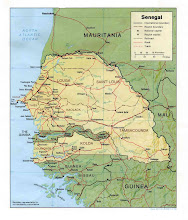
Senegal’s economy will grow about 3.1 percent this year, up from 2.5 percent in 2008, as government management of the economy improves, the International Monetary Fund said.
“Budgetary slippages, which had seriously affected the economy” and put IMF support for Senegal at risk, have been successfully addressed, the Washington-based lender said in an e-mailed statement today. “The government’s unpaid bills have been substantially reduced and far-reaching public financial management reforms launched.”
The IMF expects growth in the west African nation to accelerate to 3.4 percent next year and 4.3 percent in 2011.
Consumer inflation was projected to slow to 3.3 percent this year from 5.8 percent last year, and to 0.8 percent in 2010, as food and fuel price increases slow, the IMF said.
The Wade administration should be credited with helping to effect the fiscal discipline that has got the country straightened out.
Showing posts with label economy. Show all posts
Showing posts with label economy. Show all posts
Monday, July 13, 2009

Friday, April 17, 2009
A new Senegal energy source: openness
A unique solution to Senegal's energy dilemma was recommended recently by Alex Segura, the IMF's resident representative. The solution is two part: cash and transparency. And the two go together. Senegal's utilities are stuck in a spot market rut: they buy fuel oil one tanker at a time, in cash, frequently borrowed cash, from who-knows-where... Instead Segura urges transparent bidding. International finance experts have always pushed open bidding in African economies, with little progress. In the energy sector it makes sense, but is no easier than other sectors such as infrastructure. Oil powers Senegal's feeble generation capacity. That's imported, refined oil--especially subject to the world extaction, refining and transportation market, and its very evident vagaries, especially recently... It will take some real arm twisting for Senegal's utility sector (hardly deserving the name) to institute the discipline, and smarts, necessary for a successful open bidding program. But the payoffs would seem great: the consequent tools of hedge and option trading of supplies could create a buffer in hard economic times as these... Segura's recent comments were larded with praise for the progress being made by Senegal's establishment in the area of budget reform and accountability, setting the foundation for sophistication in its energy policies and practices...
Wednesday, February 18, 2009
Senegal economy dropped big in 2008; better this year?
The growth of gross domestic product (GDP) of Senegal in 2008 registered a sharp drop, from 4.7 percent in 2007 to only 2.5 percent, according to the Senegal representative of the International Monetary Fund (IMF), Alex Segura. (Who recently had his Dakar apartment burlarized, by the way.)
"Between 1995 and 2005, Senegal has had a growth rate around 5 percent. In 2007 it was 4.7 percent," Segura told Radio France Internationale (RFI).
But "the effect of domestic debt on economic activity was very negative and led to a slowdown in activity in 2008 with a growth rate estimated at 2.5 percent, which is a sharp drop," he said. In 2006, the GDP of Senegal had already been a bad year with 2.4 percent.
In 2008, the secondary sector was severely affected, providers of the state have not been paid on time. Many companies were forced to reduce their activities," he added. According to Segura, the growth of non-agricultural GDP was only 1.5 percent in 2008.
For 2009, the IMF's estimated growth for Senegal is 4 percent.
Regarding the heavy domestic debt, "a third had been paid a week ago. The stock of 225 billion CFA francs (342 million) registered with the authorities, there were still around 150 billion CFA francs," Segura said.
"The Minister of Finance (Abdoulaye Diop) is working to find resources to pay the rest. In the coming weeks, if not all, much will be paid," said the IMF representative.
Good credit means paying your debts. The slow pay policy of Senegal's central government could continue to drag down the economy.
"Between 1995 and 2005, Senegal has had a growth rate around 5 percent. In 2007 it was 4.7 percent," Segura told Radio France Internationale (RFI).
But "the effect of domestic debt on economic activity was very negative and led to a slowdown in activity in 2008 with a growth rate estimated at 2.5 percent, which is a sharp drop," he said. In 2006, the GDP of Senegal had already been a bad year with 2.4 percent.
In 2008, the secondary sector was severely affected, providers of the state have not been paid on time. Many companies were forced to reduce their activities," he added. According to Segura, the growth of non-agricultural GDP was only 1.5 percent in 2008.
For 2009, the IMF's estimated growth for Senegal is 4 percent.
Regarding the heavy domestic debt, "a third had been paid a week ago. The stock of 225 billion CFA francs (342 million) registered with the authorities, there were still around 150 billion CFA francs," Segura said.
"The Minister of Finance (Abdoulaye Diop) is working to find resources to pay the rest. In the coming weeks, if not all, much will be paid," said the IMF representative.
Good credit means paying your debts. The slow pay policy of Senegal's central government could continue to drag down the economy.
Subscribe to:
Posts (Atom)