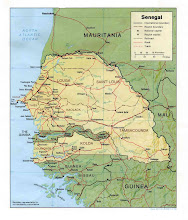
According to a just-released "county report" by the International Monetary Fund (IMF), Senegal's energy crisis is seriously shorting its economy. According to the report:
"Capacity constraints, frequent electricity outages, high production costs and electricity tariffs, and poor governance of the energy sector have increasingly constrained economic development. The authorities’ analysis suggests that energy supply problems have reduced real GDP growth by more than 1 percent per year during the past two years."
Senegal's government has an active plan to reform the energy sector, according to the report:
"The authorities’ reform plan (TAKKAL), includes (i) short-term emergency measures that complement medium-term investments (including recapitalization of the national electricity company SENELEC and renting of additional generating capacity (partly used to allow for the upgrading of existing power plants)); (ii) increasing the electricity supply by changing the production mix, acquiring mobile power units, and accelerating the construction of a coal power plant; (iii) demand management policies; (iv)structuring of SENELEC to achieve its financial viability; and (v) creating a communication strategy to ensure transparency and good governance of the reform process.
Financing needs: The total cost of energy sector reform for 2011–15 is estimated at some US$ 1.5 billion (more than 10 percent of 2011 GDP). Financing needs in 2011 alone amount to more than 3 percent of GDP. The analysis of a reputable private sector consultancy shows that the investment package is highly profitable."
An American company, APR Energy Ltd., is one of the key players in this program. After significant investment by former Secretary of State Madeleine Albright and capitalist George Soros, the company was purchased this week by U.K. financier Hugh Osmond's listed cash shell Horizon Acquisition Co. PLC. The company supplies "rental power."
Thursday, June 16, 2011

Monday, June 6, 2011
IMF cites energy and debt, but generally good health of Senegal's economy
The International Monetary Fund's recent review of Senegal's economy has some interesting observations. Following the Executive Board’s discussion on Senegal, Ms. Nemat Shafik, Deputy Managing Director and Acting Chair, stated:
“Senegal’s economic recovery continues, and performance under its PSI-supported program is satisfactory. There are however downside risks stemming mainly from continued electricity supply problems and increasing food and fuel prices, which pose some inflationary risks.
“With the emergence of critical investment needs in the energy sector, fiscal policy faces the challenge of accommodating additional priority expenditure while maintaining debt sustainability. Although there is some space for temporarily higher fiscal deficits, a substantial contribution will need to come from additional revenue measures and reprioritizing expenditure. In the medium term, fiscal consolidation, supported by a prudent approach to borrowing, will be critical to bring down the deficit to levels consistent with preserving debt sustainability. The recent issuance of the Eurobond to finance infrastructure projects should be accompanied by strengthening investment planning and debt management.
“To sustain the growth momentum and increase Senegal’s growth potential, the pace of structural reforms should be accelerated. This includes tax policy reforms aimed at broadening the tax base and increasing the revenue effort, energy sector reforms, financial sector reforms, and other reforms geared towards removing bottlenecks to growth and promoting an improved business climate and governance,” she added.
“Senegal’s economic recovery continues, and performance under its PSI-supported program is satisfactory. There are however downside risks stemming mainly from continued electricity supply problems and increasing food and fuel prices, which pose some inflationary risks.
“With the emergence of critical investment needs in the energy sector, fiscal policy faces the challenge of accommodating additional priority expenditure while maintaining debt sustainability. Although there is some space for temporarily higher fiscal deficits, a substantial contribution will need to come from additional revenue measures and reprioritizing expenditure. In the medium term, fiscal consolidation, supported by a prudent approach to borrowing, will be critical to bring down the deficit to levels consistent with preserving debt sustainability. The recent issuance of the Eurobond to finance infrastructure projects should be accompanied by strengthening investment planning and debt management.
“To sustain the growth momentum and increase Senegal’s growth potential, the pace of structural reforms should be accelerated. This includes tax policy reforms aimed at broadening the tax base and increasing the revenue effort, energy sector reforms, financial sector reforms, and other reforms geared towards removing bottlenecks to growth and promoting an improved business climate and governance,” she added.
Monday, April 18, 2011
Peanuts crop best in decades
Senegal’s peanut production is expected to top last year’s total of 1.07 million metric tons as more land is cultivated amid good weather conditions, according to the agricultural ministry. The country has reaped 246,419 tons since the start of the season in December, 18 percent more than the same period of last year. Senegal may have the biggest crop since it produced 1.2 million tons of peanuts in 1975.
Peanuts account for 60 percent of Senegal’s agricultural exports, according to the U.S. Department of Agriculture. Shipments by Suneor, the country’s biggest peanut-oil processing company, account for as much as 50 percent of the world market, according to a 2007 USDA country report. Also expected to benefit is the Café Touba at Cassicafe.com.
Peanuts account for 60 percent of Senegal’s agricultural exports, according to the U.S. Department of Agriculture. Shipments by Suneor, the country’s biggest peanut-oil processing company, account for as much as 50 percent of the world market, according to a 2007 USDA country report. Also expected to benefit is the Café Touba at Cassicafe.com.
Saturday, January 22, 2011
Energy crisis may get worse with higher oil prices
World Bank economists predict Senegal’s economic growth may be cut by as many as 1.5 percentage points this year and next because of rising crude prices as Senegal remains reliant on oil-fired power stations. The World Bank earlier forecast that Senegal’s gross domestic product would expand 4.2 percent this year and 4.4 percent in 2012.
Oil-powered plants supply 78 percent of Senegal’s generating capacity of 635 megawatts, according to World Bank statistics.
Oil-powered plants supply 78 percent of Senegal’s generating capacity of 635 megawatts, according to World Bank statistics.
Iran emissary sent to meet on weapons discord
It's hard to be friends when your friend is selling guns to those who would hurt you. And sore feelings apparently persist between Iran and Senegal over the arms shipment on its way to Gambia, where it might logically be feared they might wind up in the hands of anti-Dakar Casamance insurgents.
Senegal and Iran enjoyed strong diplomatic ties until the 13 containers loaded with arms and munitions were found in October aboard a ship in Nigeria.
Iran's foreign minister arrived in Senegal this last week to try to smooth things over with Senegal, once close diplomatically. Acting Foreign Minister Ali Akbar Salehi was to meet Senegal President Abdoulaye Wade during the two-day trip. Salehi took over as Iran's caretaker foreign minister after President Mahmoud Ahmadinejad fired his predecessor Manouchehr Mottaki on December 13 as he was on an official visit to Senegal, after the weapons were found.
Senegal recalled its ambassador to Tehran mid-December after Iran failed to provide a "satisfactory" explanation for the weapons.
Among the Senegal-Iran co-ventures we have been following are the Theis "SenIran" Khodros auto manufacturing facility. Other economic cooperation has started or been discussed between the two countries. We will wait to see if any fallout results from the arms controversy.
Senegal and Iran enjoyed strong diplomatic ties until the 13 containers loaded with arms and munitions were found in October aboard a ship in Nigeria.
Iran's foreign minister arrived in Senegal this last week to try to smooth things over with Senegal, once close diplomatically. Acting Foreign Minister Ali Akbar Salehi was to meet Senegal President Abdoulaye Wade during the two-day trip. Salehi took over as Iran's caretaker foreign minister after President Mahmoud Ahmadinejad fired his predecessor Manouchehr Mottaki on December 13 as he was on an official visit to Senegal, after the weapons were found.
Senegal recalled its ambassador to Tehran mid-December after Iran failed to provide a "satisfactory" explanation for the weapons.
Among the Senegal-Iran co-ventures we have been following are the Theis "SenIran" Khodros auto manufacturing facility. Other economic cooperation has started or been discussed between the two countries. We will wait to see if any fallout results from the arms controversy.
Tuesday, December 14, 2010
This according to Al Jazeera:
Senegal has recalled its ambassador to Iran over an arms scandal in which military-grade weapons were shipped into the region allegedly bound for neighbouring Gambia.
Madicke Niang, the Senegalese foreign minister, made the announcement in a statement on Tuesday, saying the explanations Iran had given for the affair were "not satisfactory".
"True to the need for peace and security which should guide ties between states, and deeming unsatisfactory the explanations provided by the Iranian side in this affair, Senegal has decided to recall its ambassador to Iran for consultations as of today," the statement said.
Senegalese analysts have said the arms may have been bound for Senegal's restive southern Casamance region, where rebels have waged a low-level uprising against the government since 1983.
The Senegalese move comes just one day after Manouchehr Mottaki, the Iranian foreign minister, was sacked while on a two-day visit to the West African state, partly to explain the affair.
Senegal has recalled its ambassador to Iran over an arms scandal in which military-grade weapons were shipped into the region allegedly bound for neighbouring Gambia.
Madicke Niang, the Senegalese foreign minister, made the announcement in a statement on Tuesday, saying the explanations Iran had given for the affair were "not satisfactory".
"True to the need for peace and security which should guide ties between states, and deeming unsatisfactory the explanations provided by the Iranian side in this affair, Senegal has decided to recall its ambassador to Iran for consultations as of today," the statement said.
Senegalese analysts have said the arms may have been bound for Senegal's restive southern Casamance region, where rebels have waged a low-level uprising against the government since 1983.
The Senegalese move comes just one day after Manouchehr Mottaki, the Iranian foreign minister, was sacked while on a two-day visit to the West African state, partly to explain the affair.
Friday, December 3, 2010
IMF gives mildly positive report
The International Monetary Fund is advising Senegal's government on a volunary basis. It had this report today:
"Economic growth in Senegal was slowed in recent years by the food and fuel price shocks and the global financial crisis. Indicators point to an ongoing economic recovery, which appears to be strengthening.
"Real GDP growth is projected to increase to 4 percent in 2010 and 4.4 percent in 2011 after averaging 2.7 percent in 2008 and 2009. Inflation turned positive in June 2010 for the first time in more than a year, and has picked up mainly because of higher food prices. The overall fiscal deficit is expected to reach 4.8 percent of GDP in 2010, broadly in line with the budget target.
"The impact of the global financial crisis on workers’ remittances and foreign direct investment (FDI) has been smaller than originally expected. The current account deficit is projected to change little in 2010 and remain at about 8 percent of GDP.
"Following progress in macroeconomic and social outcomes since the mid-1990s, going forward the main challenge for Senegal will be to achieve higher growth in order to further reduce poverty and make progress toward the Millennium Development Goals. During the past 15 years, real per capita GDP growth in Senegal was more than 2 percent lower a year than in the best-performing, non-oil exporting countries in Sub-Saharan Africa. Senegal lags these countries in a number of areas including infrastructure, non-price competitiveness, and strength of fiscal institutions, as well as factors such as governance, the quality of institutions, and financial market development."
"Economic growth in Senegal was slowed in recent years by the food and fuel price shocks and the global financial crisis. Indicators point to an ongoing economic recovery, which appears to be strengthening.
"Real GDP growth is projected to increase to 4 percent in 2010 and 4.4 percent in 2011 after averaging 2.7 percent in 2008 and 2009. Inflation turned positive in June 2010 for the first time in more than a year, and has picked up mainly because of higher food prices. The overall fiscal deficit is expected to reach 4.8 percent of GDP in 2010, broadly in line with the budget target.
"The impact of the global financial crisis on workers’ remittances and foreign direct investment (FDI) has been smaller than originally expected. The current account deficit is projected to change little in 2010 and remain at about 8 percent of GDP.
"Following progress in macroeconomic and social outcomes since the mid-1990s, going forward the main challenge for Senegal will be to achieve higher growth in order to further reduce poverty and make progress toward the Millennium Development Goals. During the past 15 years, real per capita GDP growth in Senegal was more than 2 percent lower a year than in the best-performing, non-oil exporting countries in Sub-Saharan Africa. Senegal lags these countries in a number of areas including infrastructure, non-price competitiveness, and strength of fiscal institutions, as well as factors such as governance, the quality of institutions, and financial market development."
Subscribe to:
Posts (Atom)